
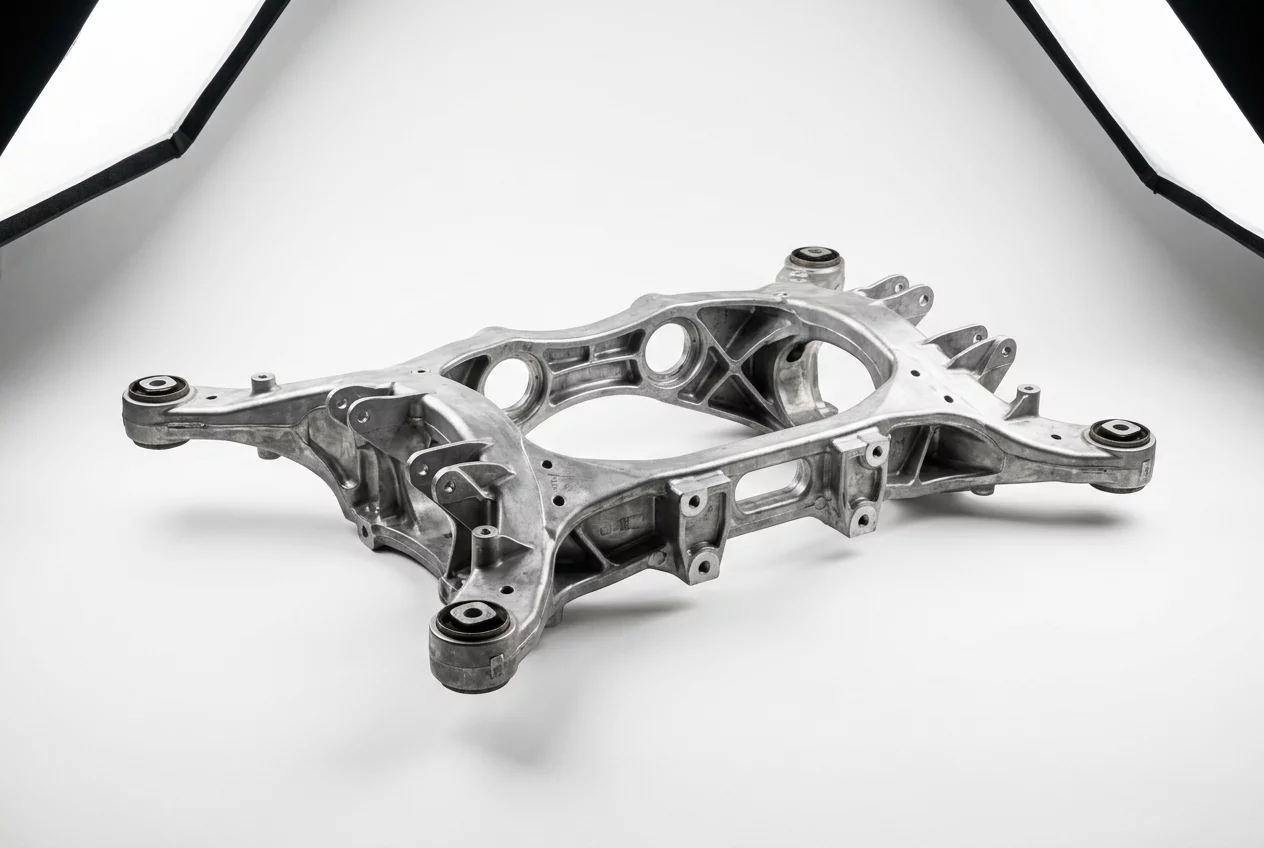
A British consortium has officially unveiled a series of breakthrough cast aluminum subframes, marking a significant milestone in automotive engineering. These advanced components are specifically engineered to reduce vehicle mass, optimize development cycles, and significantly accelerate the pace of production line operations. By leveraging high-pressure die-casting techniques, the consortium aims to replace traditional multi-part steel assemblies with lightweight, single-piece aluminum structures.
Engineering the Future: Lightweight Cast Aluminum Subframes
The primary advantage of this innovation lies in mass reduction. Preliminary tests indicate a weight saving of up to 35% compared to conventional steel subframes. For electric vehicles, where battery weight is a constant challenge, this reduction translates directly into improved range and better handling dynamics. Engineers have focused on structural rigidity, ensuring that the lighter frames do not compromise safety or noise, vibration, and harshness (NVH) levels.
Traditional vehicle subframes are typically constructed from dozens of steel stampings welded together. While durable, these assemblies are heavy and require complex manufacturing processes. The new approach utilizes high-vacuum die-casting technology to produce large, single-piece aluminum frames, effectively eliminating the need for extensive welding and alignment during assembly.
Production Efficiency and Supply Chain Impact
Consolidating dozens of parts into a single casting offers substantial advantages in manufacturing efficiency. This simplification streamlines the assembly line, reduces the overall manufacturing footprint, and shortens the development cycle for new models. By minimizing the number of individual components, automakers can also lower their tooling costs and reduce potential failure points in the chassis architecture.
- Mass Reduction: Up to 35% lighter than equivalent steel structures.
- Simplified Assembly: Major reduction in parts count and factory complexity.
- Structural Integrity: Enhanced rigidity and improved crash performance ratings.
- Sustainability: Lower lifecycle emissions due to vehicle weight savings.
As the UK automotive sector transitions toward an electric-first future, innovations like these aluminum subframes will play a vital role. By cutting development costs and improving vehicle efficiency, the consortium's breakthrough provides a viable path for manufacturers to deliver high-performance, long-range vehicles to the mass market while maintaining industrial competitiveness.
TechEnthusiast
Active ContributorWeight reduction is key for future EVs. It is great to see British engineering at the forefront of these structural advancements.